9. Is progress in the arts dependent on technological change? (Oxford Entrance Exam, 1972)
11. How would you set about proving that you are not a machine? (Cambridge Entrance Exam, 1968)
13. “Had Cleopatra’s nose been shorter, the whole face of the world would have changed” (Pascal). Discuss. (All Souls Entrance Exam, 1995)
The questions above are from a special secondary examination no longer in existence. In the 1960s, the top 5% of England’s 17-18 year old population would compete annually for a handful of bursaries in the hardest tests ever devised. Success could mean the difference between attending and not attending university; between moving up a class or remaining locked in place, perhaps, even worse, sliding downwards. To produce the gradation necessary within the top 5%, these ‘bursary exams’ were made extremely difficult: far harder, in fact, than most University exams today.
The national bursary exam was called the ‘Scholarship’ Level (or the ‘S-Level’). Only those scoring over 75% in their ‘Advanced Level’ (A-level) could sit the S-Level, and your performance would determine whether you would receive one of the 400 state scholarships. My PhD supervisor regarded his French S-Level (translating Diderot) as the most difficult exam he ever sat. We tend to assume today that the top tier of exams is restricted to STEM subjects, but prior to the 1990s there were extended exams for all disciplines. The 1978 English S-Level, for example, presented the candidate with an early draft of Shakespearean verse and asked them to compare it to the ‘canonical’ folio piece, explaining why Shakespeare made the changes he did. Or, slightly earlier, the 1967 S-Level History Paper, posed these questions:
10. Were the supporters of Charles I more far-sighted than their opponents?
14. ‘Modern times came in with steam.’ Do you agree?
Oxford and Cambridge, always special, had their own bursary examinations. Prior to 1960, all applicants would be expected to know two additional modern languages and either Latin or Ancient Greek. They would then sit a specialized examination in their chosen subject. The Further Mathematics paper in 1974, for instance, had the following question:
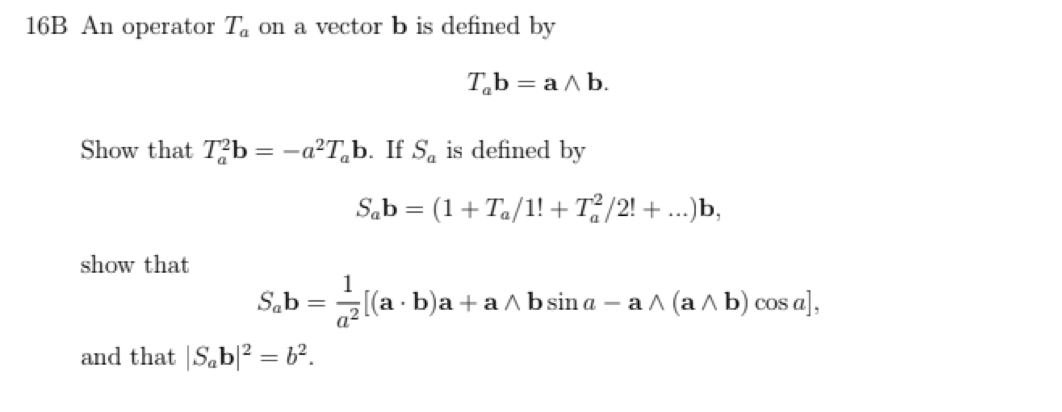
I could write much about these exams. There is a sort of joy to their breadth and curiosity. When I read them I imagine a wizened don holed up in some dusty library, surrounded by books, cackling ‘Have at you! Let’s see how they deal with this!’ It was all part of the Great Game of academia, a civilizational cricket match played over decades, with brilliant young scholars as the star players and timeless scholarship as its highlights.
And right at the center of this match was a special interdisciplinary subject: the General Paper. Every pupil, whether for the Oxbridge interview or S-Level exam, Mathematics major or English, had to sit the General Paper alongside their additional languages and classical mastery. This paper, through its variegated fascinations and obsessions, provides a snapshot into what the British intellectual elite believed were the Big Questions of the day. Take the All Souls College Entrance Exam from 1960:
5. Is it out of date to be a gentleman?
10. Why did the Second World War stimulate fewer new creeds or political ideas than the First?
13. “Optimists are teaching their students Russian; pessimists are teaching them Chinese.”
Every decade’s worldview was compressed into its questions. 1911 asked whether ‘The master of the sea is the master of the world’ , whilst in 1938 a question ran: ‘have the dangers of a declining population been exaggerated?’ The 1960s wondered if ‘morality is impossible without religion?’ , why the ‘mystical Eastern religions had become so popular in Europe?’ and how to explain the oddity that, 'under conditions of automation, ‘do it yourself’ has become so popular a Slogan.' Then, fast-forwarding to the, 1990s, new themes for the new era reappeared:
12. Is the death of communism a threat to Western democracy? (1993)
17. “The human genome is a genetic garden from which hereditary defects should be weeded.” (1996)
14. Will race relations be the same after the O.J. Simpson Trial? (1996)
Although probably unintentional, the questions are sodden with the psyche and zeitgeist of the decade’s elite. What were they insecure about? Which issues did they think their times uniquely faced, or, alternatively, which universal problems did they feel pressing down upon themselves? Where did they think the action was happening? If you want to learn what the smartest, most introspective British elites believed their rulers should think about, these exams contain the richest signal.
Whilst much has been written on examination structure, virtually nothing has been written about their content. Every year, archives destroy their holdings to make space for new material. I have therefore started scanning them and now have one of the largest private collections of exam questions. It includes the old papers from the Oxford and Cambridge scholarship exams, the S-Levels, the Scottish CSYS and old Higher papers, and the All Souls College Prize Fellowship Examinations.
The following 8 part series will explore these papers, decade to decade, from 1900 to 2000. (After 2008, almost all of the exams were abolished or distorted beyond recognition). What will emerge is a sense of civilizational dialogue stretching across the century, changing in obsession, assumption, and prejudice. What will also become clear is that we have made almost no progress on any of these problems. They have, instead, been slowly taken off the table as either matters of personal opinion, imponderable irrelevancy, or debates so well-settled that it is offensive to reconsider them.
Nonetheless, the questions refuse to die. They keep returning, haunting the present and unsettling modern academic debates. Can humanity thrive in conditions of modernity? Science as a Faustian bargain: Discuss. Are all men born equal, or do we need to make them equal? Does technological stagnancy produce cultural stagnancy? All civilizations decline and fall: is this invariably true? Mass education is incompatible with great art; Discuss. Are the intelligent inevitably drawn to cosmopolitanism? The ineffable essence of Britishness is its humor. Discuss the sources of national power. Can we design a new religion for modern conditions?
19. Every age years for a more beautiful world’ (John Huizinga). Is it true of ours? (1996)
The years whistle by: 1910, 1920, 1930… we think of them as outdated, irrelevant, purely as products of their time. We claim to have moved past them, but no-one is convinced. Do feel the endless recapitulations and repetitions in our discourse? Old questions forgotten and remembered, forgotten and remembered; presented as ‘timeless questions’ then decisively solved and filed away, ready to be resurrected again, over and over, by the next generation and the next, always forgetting, never learning.
These questions will never leave us alone until they are met in the great playing field of free inquiry. I do not propose to resolve them in this short series: instead, I will show their linear trajectory over a century from 1900-2000, before the schizophrenic and scattered implosion at the turn of the millennium. It will be up to you, the readers – whomever, or whatever you are – to take this process up once more, and to meet the challenge they present without fear or hesitation.